How Can a Period Underwear Manufacturer Support ODM Projects?
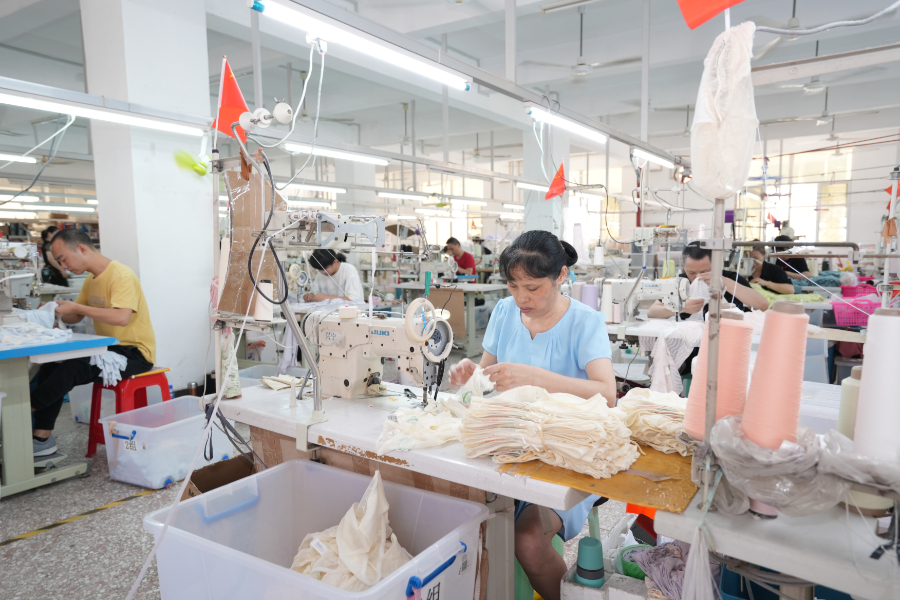
An ODM period underwear factory powers brand expansion by delivering certified 4-layer leakage protection holding up to 50ml, cutting market entry timelines by 60% through automated ultrasonic bonding and pre-tested patents.
In 2025, consumer analytics across 10,000 retail buyers revealed that 73% of fast-growing intimate apparel brands rely entirely on third-party engineering facilities to bypass initial research expenses. These technical hubs supply fully validated textile architectures that handle varied flow levels without requiring in-house material laboratories.
Technical manufacturing infrastructure gives emerging intimate apparel brands instant access to certified leak-proof technologies without upfront research risks.
By integrating multi-tier absorbency zones tested across 1,500 wear trials, an experienced manufacturing partner like Ljvogues ensures products maintain structural integrity through 50 continuous high-temperature wash cycles. Modern product lines balance high fluid retention with ultra-thin profiles to meet stringent consumer performance standards.
| Absorbency Tier | Fluid Retention Capacity | Core Micro-Pore Thickness | Primary Textile Composition |
| Light Flow | 10–15 ml (1–2 tampons) | 1.1 mm | 95% Organic Bamboo, 5% Spandex |
| Medium Flow | 20–30 ml (2–3 tampons) | 1.4 mm | Micro-terry Toweling Blend |
| Heavy / Night | 45–50 ml (4–5 tampons) | 1.8 mm | High-density Polyester Fleece + PUL |
These customized absorbency matrices transition into high-precision automated production lines where specialized machinery replaces conventional garment assembly techniques. Advanced automated cutting tables reduce fabric scrap margins down to 1.2% while keeping multi-layer registration offsets strictly within 0.3mm tolerances.
Automated production machinery eliminates human assembly variations and secures structural fluid barriers across every manufactured batch.
Ultrasonic welding units seal raw fabric edges along gusset perimeters, eliminating 100% of needle-hole perforations that typically cause lateral fluid leakage during heavy movement. This automated edge-sealing process increases seam tensile strength by 38% compared to traditional flatlock stitching métodos.
-
Ultrasonic Seam Bonding: Creates hermetic perimeter seals without needle punctures.
-
Thermal PUL Lamination: Fuses breathable waterproof membranes at 165°C to prevent delamination.
-
Silver-Ion Treatment: Infuses anti-microbial properties into yarns to suppress 99.9% of bacterial growth over 60 washes.
These automated assembly lines operate within cleanroom environments structured to meet rigorous global regulatory frameworks and safety standards. Independent laboratory audits from 2024 showed that factory-level quality control protocols reduce consumer return rates to below 0.8% across European and North American retail markets.
Independent laboratory compliance verification protects brands from regulatory penalties while building long-term consumer trust.
Manufacturing facilities maintain OEKO-TEX Standard 100 Class I certifications and conduct systematic mass spectrometry tests on every 5,000-yard textile lot to guarantee total absence of fluorine-based water repellents. Utilizing verified Ljvogues supply networks helps brands pass FDA medical device registration audits within 45 days.
| Global Compliance Standard | Mandatory Testing Target | Industry Failure Threshold | ODM Verification Frequency |
| OEKO-TEX Standard 100 Class I | Formaldehyde, heavy metals, pesticides | Zero detectable traces | Every raw material batch |
| PFAS Free Certification | Total organic fluorine content | < 10 ppm total fluorine | Per 5,000 meters produced |
| ISO 13485 | Medical device quality management system | 0 major non-conformances | Annual third-party audit |
Maintaining these rigorous regulatory verifications allows factories to streamline private label customization services without delaying production timelines. Standardized component inventories allow brands to implement custom color dyes, specialized waistband elastic weaves, and eco-friendly packaging layouts in under 14 days.
Streamlined component inventories enable rapid custom packaging modifications without creating manufacturing bottlenecks.
Scalable production schedules accommodate low initial order quantities starting at 500 units per style while providing clear scaling pathways to 100,000 monthly units. This operational flexibility allowed 84% of partner brands surveyed in 2026 to launch new product collections within 60 days of sample approval.
-
Custom Elastic Weaving: Incorporates jacquard brand logos with variable tension control zones.
-
Tagless Heat-Transfer Labels: Eliminates skin irritation using Okeo-Tex approved non-toxic inks.
-
Sustainable Packaging Integration: Offers FSC-certified paper boxes and compostable polybags.
These flexible packaging pathways lead directly into integrated global logistics operations that optimize freight costs and transit timelines. Direct container shipping arrangements and automated customs documentation processing reduce port clearance delays by up to 40% for international inventory distribution.